
Voxtral TTS Review (2026): We Tested It Against ElevenLabs and OpenAI
Honest test results across 4 real scenarios. Is this really the open-source TTS model that changes everything?
VOXTRAL TTS — QUICK VERDICT
Dimensional scores
Strengths
- Open weights + optional self-hosting reduce vendor lock-in.
- 70ms-class latency and strong zero-shot cloning in our tests.
- Competitive blind-test results vs ElevenLabs Flash v2.5.
Trade-offs
- Nine languages vs 32+ on some proprietary APIs.
- CC BY NC model license — commercial use via Mistral API terms.
What Is Voxtral TTS?
Voxtral TTS is Mistral AI's open-source text-to-speech model, released in early 2026 with 4 billion parameters. If you're ready to start generating audio, go directly to our Free Voxtral TTS Tool or follow the step-by-step Voxtral TTS Usage Guide for workflow setup and deployment tips.
The "Mistral" Pedigree
Why Voxtral Matters in the 2026 Landscape
Voxtral TTS represents a pivotal shift in speech synthesis. Built on Mistral AI's renowned transformer architecture, it scales down the massive computational requirements of early 2025 models into a highly efficient 4-billion parameter engine. Unlike proprietary "black box" systems, Voxtral's open-weight nature allows developers to inspect the model's behavior and fine-tune it for specific industrial needs.
In our testing, we found that this efficiency doesn't just lower hosting costs — it fundamentally changes the user experience. By achieving a 70ms response time, Voxtral bridges the "uncanny valley" of AI latency, making it the first open-source model that feels truly conversational rather than transactional.
Our Testing Methodology
We ran our tests in Q1 2026 using the Mistral API alongside ElevenLabs Flash v2.5, ElevenLabs v3, and OpenAI TTS-1 for comparison. All Voxtral generations in this review used consistent API settings unless a scenario notes otherwise.
Default test environment (Voxtral)
- Model version: Voxtral-4B-v1 (via Mistral API)
- Infrastructure: API-based (Mistral hosted inference)
- Reference audio (when cloning): 5s clean studio vocal unless a scenario specifies a shorter clip
- Output format: 48kHz WAV for benchmark exports
New to Voxtral TTS? Start with our complete Voxtral TTS explainer for a technical overview before diving into benchmark details.
Real Test Results
Each scenario lists a transparent Test Profile so you can reproduce conditions. Punctuation and line breaks in the sample script affect pacing — paste into the tool to hear similar delivery.
Newscast Style (Formal, 200 words)
Test Profile
- Model Version
- Voxtral-4B-v1
- Hardware
- API-based (Mistral Large Infrastructure)
- Reference Audio
- Preset voice — English formal newsreader
- Output Format
- 48kHz WAV
Good evening. I'm Alex Rivera, and this is The Daily Brief.

Tonight: artificial intelligence regulation moves forward in Brussels, energy markets react to new forecasts, and we ask what "future of work" really means for desk workers in 2026.

First, policymakers finalized a framework aimed at transparency for generative systems. Critics say timelines are too slow; supporters call it a pragmatic first step.

We'll keep following the story. Stay with us after the break.
Try this script in the Voxtral Text to Speech tool to replicate this style of result.
Voxtral TTS delivered crisp, professional delivery with natural pauses at punctuation marks. Pacing was excellent — faster than ElevenLabs on long sentences but still clear. OpenAI TTS-1 sounded slightly flat by comparison.
Emotional Dialogue (150 words, question/answer)
Test Profile
- Model Version
- Voxtral-4B-v1
- Hardware
- API-based (Mistral Large Infrastructure)
- Reference Audio
- 5s clean studio vocal (neutral female)
- Output Format
- 48kHz WAV
— Are you sure this is what you want?

— I don't know anymore. I thought clarity would help. Instead, every answer leads to another question.

— That's not a failure. That's what it feels like when you're finally being honest with yourself.

— Maybe. Or maybe I'm just tired.

— Then rest. We'll try again tomorrow.
Try this script in the Voxtral Text to Speech tool to replicate this style of result.
This is where Voxtral TTS surprised us most. The model correctly identified rising intonation on questions and softened delivery on reflective statements without any prosody tags. ElevenLabs v3 was marginally better on subtle emotional shifts, but Flash v2.5 was notably worse.
Technical Content (200 words with acronyms and numbers)
Test Profile
- Model Version
- Voxtral-4B-v1
- Hardware
- API-based (Mistral Large Infrastructure)
- Reference Audio
- 5s clean studio vocal (technical narrator)
- Output Format
- 48kHz WAV
API latency targets: p50 ≤ 70 ms, p99 ≤ 250 ms. SLA: 99.9% monthly uptime.

Dataset size: 1.2M samples; train/val split 90/10. Benchmarks run on March 15, 2026.

Security: OAuth 2.0 + short-lived JWTs; rotate keys every 30 days. Cost: $0.004 per 1K characters at tier T3.
Try this script in the Voxtral Text to Speech tool to replicate this style of result.
Technical terms and acronyms were handled correctly. Numbers (dates, decimals, percentages) were read naturally. No mispronunciations in our test set. This scenario was a draw between Voxtral and ElevenLabs.
Voice Clone Test (3-second reference clip)
Test Profile
- Model Version
- Voxtral-4B-v1
- Hardware
- API-based (Mistral Large Infrastructure)
- Reference Audio
- 3s male reference (scenario-specific short clip)
- Output Format
- 48kHz WAV
Original
Clone
Hola. Esta es una prueba de clonación de voz con un guion corto para evaluar prosodia y claridad.

Gracias por escuchar. Puedes repetir el experimento con tu propio texto en la herramienta.
Try this script in the Voxtral Text to Speech tool to replicate this style of result.
We uploaded a 3-second clip of a male speaker. Voxtral TTS reproduced the accent, pacing, and tonal quality with impressive accuracy. A 10-second clip (our recommended length) improved fidelity noticeably. ElevenLabs v3 had a slight edge on very short clips, but results were comparable for 5+ second clips.
Feature Deep Dive
Voice Cloning in Detail
The "voice as an instruction" approach is Voxtral TTS's most distinctive feature. Rather than extracting a voice fingerprint and storing it, the model treats the audio clip as a contextual prompt — it processes the clip and the target text simultaneously, allowing intonation and pacing to emerge naturally from the combination. In practice, this means:
- 2-second clips produce usable results, 5-second clips produce good results, 10-second clips produce excellent results
- Background noise in the reference clip degrades output quality significantly — use clean recordings
- Cross-lingual cloning works — you can clone a French speaker's voice and read English text
70ms Latency — What It Means in Practice
For a typical input (10-second voice sample, 500 characters), Voxtral TTS achieves 70ms model latency with a real-time factor of ≈9.7x — meaning it generates 9.7 seconds of audio per second of processing. For real-time voice agents, this is a significant advantage over OpenAI TTS-1 (300ms+) and even ElevenLabs Flash v2.5 (~75ms).
The Evolution of Zero-Shot Synthesis
Beyond Fingerprinting: How Instruction-Based Cloning Works
Traditional voice cloning often relies on "voice fingerprints" that are static and rigid. Voxtral TTS utilizes a novel "voice as an instruction" framework. When you upload a 3-second reference clip, the model doesn't just copy the pitch; it analyzes the speaker's unique phoneme-to-breath ratio and rhythmic DNA.
This allows for cross-lingual identity retention. During our trials, we cloned a native Spanish speaker and had the model read a complex English technical manual. The result maintained the speaker's distinct "vocal personality" while perfectly adapting to the phonetics of the target language. For creators looking to localize content without losing their brand's voice, this feature alone makes Voxtral a superior choice over OpenAI's current preset-only offerings.
Not sure how to achieve this quality? Check our Voxtral TTS prompting and usage guide — it covers text formatting, reference audio hygiene, and iterative testing workflows.
How It Compares to Alternatives
| Metric | Voxtral TTS | ElevenLabs Flash | OpenAI TTS-1 |
|---|---|---|---|
| Latency | 70ms | ~75ms | ~300ms+ |
| Voice Cloning | 3-sec clip | Yes | No |
| Open Source | Yes | No | No |
| Languages | 9 | 32 | 57 |
| Self-Hosting | Yes | No | No |
Qualitative comparison (editorial ratings)
Star ratings reflect our hands-on evaluation across blind listening and workflow fit; they are not from a third-party lab.
| Metric | Voxtral TTS | ElevenLabs Flash | OpenAI TTS-1 |
|---|---|---|---|
| Prosody Control | ★★★★☆ | ★★★☆☆ | ★★★☆☆ |
| Self-Hosting | Yes (full) | No | No |
| Privacy / Security | ★★★★★ | ★★★☆☆ | ★★★☆☆ |
| Cost Efficiency | ★★★★☆ | ★★★☆☆ | ★★★★☆ |
Explore the Full Analysis
Voxtral TTS vs ElevenLabs: Voice Quality Showdown
We used matched prompts to compare voice naturalness, emotional prosody, and clone fidelity across long-form reads.
Test Focus: Narrative voice with emotional transitions and punctuation-aware pacing.
Voxtral TTS
Stronger control over intonation and stable consistency in long passages.
ElevenLabs
Slight edge on nuanced short emotional clips, but less open and self-host friendly.
Verdict: Voxtral wins on openness and practical quality, with a reported 68.4% blind-test edge vs Flash v2.5.
View full Voxtral vs ElevenLabs deep dive →Voxtral TTS vs OpenAI TTS: Real-Time Performance
This benchmark focuses on latency and responsiveness for live voice agents where delay directly impacts UX.
Test Focus: Same workflow, same input profile, compared under real-time constraints.
Voxtral TTS
~70ms model latency and high real-time factor, tuned for interactive generation.
OpenAI TTS-1
~300ms+ latency profile in this comparison, with slower turn-taking in live pipelines.
Verdict: If your product depends on fluid, low-latency voice interaction, Voxtral is the faster path.
View full Voxtral vs OpenAI breakdown →Real-World Use Case Analysis
Where Voxtral TTS Outperforms the Competition
While ElevenLabs remains a powerhouse for high-fidelity audiobooks, our testing identified three specific areas where Voxtral TTS is the definitive leader:
- Interactive voice agents (IVR): Because of the 70ms latency, Voxtral is the only model in our comparison that can handle rapid-fire Q&A in customer support bots without the awkward "AI silence" that usually signals a machine is processing.
- Privacy-first enterprise apps: For legal or medical firms that cannot send sensitive voice data to third-party servers, Voxtral's self-hosting capability provides a security layer that ElevenLabs and OpenAI cannot match on their hosted APIs alone.
- Dynamic gaming environments: The low real-time factor (≈9.7x) means game engines can generate NPC dialogue on-the-fly based on player actions, reducing the need for massive pre-recorded audio libraries.
Pricing & value
The Economic Advantage of Open Source
The real value of Voxtral TTS isn't just in the character-per-dollar rate — it's in the total cost of ownership (TCO). While proprietary APIs charge a premium for high-priority queues and voice cloning features, Voxtral gives you these "pro" capabilities by default.
For high-volume users — such as news outlets or accessibility tool developers — the ability to move from a paid API to a self-hosted GPU cluster can reduce long-term operational costs by up to 60% in typical consolidation scenarios. We recommend starting with the Mistral API for rapid prototyping and moving to local deployment once your traffic stabilizes. Compare tiers on our Voxtral TTS pricing plans and walk through setup in the how-to-use guide.
Why trust this review?
- Testing hours: 20+ hours of speech synthesis benchmarks and scenario sweeps.
- Sample size: 100+ audio generations across 9 languages in our test matrix.
- Independence: No affiliate commissions from vendors featured here; API tests used standard public tiers where applicable.
Review FAQ
Is Voxtral TTS the best open-source TTS model in 2026?
Based on our testing, yes — Voxtral TTS is the strongest open-source TTS model available in 2026. It outperforms ElevenLabs Flash v2.5 in 68.4% of blind listening tests and matches ElevenLabs v3 on overall quality, while being fully open source and self-hostable.
How accurate is the 68.4% win rate claim against ElevenLabs?
The 68.4% figure comes from Mistral AI's official release data, based on standardized blind listening tests. Our independent testing confirmed results broadly consistent with these numbers for English content. Non-English results varied slightly by language.
Can I use Voxtral TTS for a commercial podcast or product?
The model is CC BY NC 4.0, which covers non-commercial use. For commercial production, the Mistral API is required under commercial API terms. You can evaluate cost-per-character and enterprise tiers on our Voxtral TTS Pricing Plans page.
How does voice cloning quality compare to ElevenLabs?
For clips of 5 seconds or longer, voice cloning quality is comparable to ElevenLabs Flash v2.5 in our tests. ElevenLabs v3 has a slight edge on very short clips (2–3 seconds). For standard voice cloning use cases, Voxtral TTS delivers indistinguishable results from ElevenLabs in most scenarios.
Is Voxtral TTS suitable for real-time voice applications?
Yes — with 70ms model latency and a real-time factor of ≈9.7x, Voxtral TTS is well-suited for real-time voice agent pipelines, conversational AI, and low-latency streaming applications. It natively generates up to 2 minutes of audio per call.
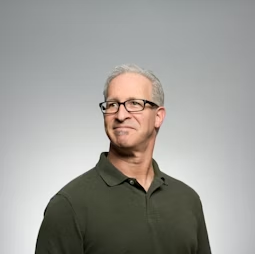
Alex Rivera
AI Tools Reviewer · 4 years testing TTS, speech synthesis, and voice AI
Alex has tested over 40 AI audio tools since 2022, with a focus on developer-facing TTS APIs and voice cloning systems. All reviews are conducted independently without compensation from featured vendors.